
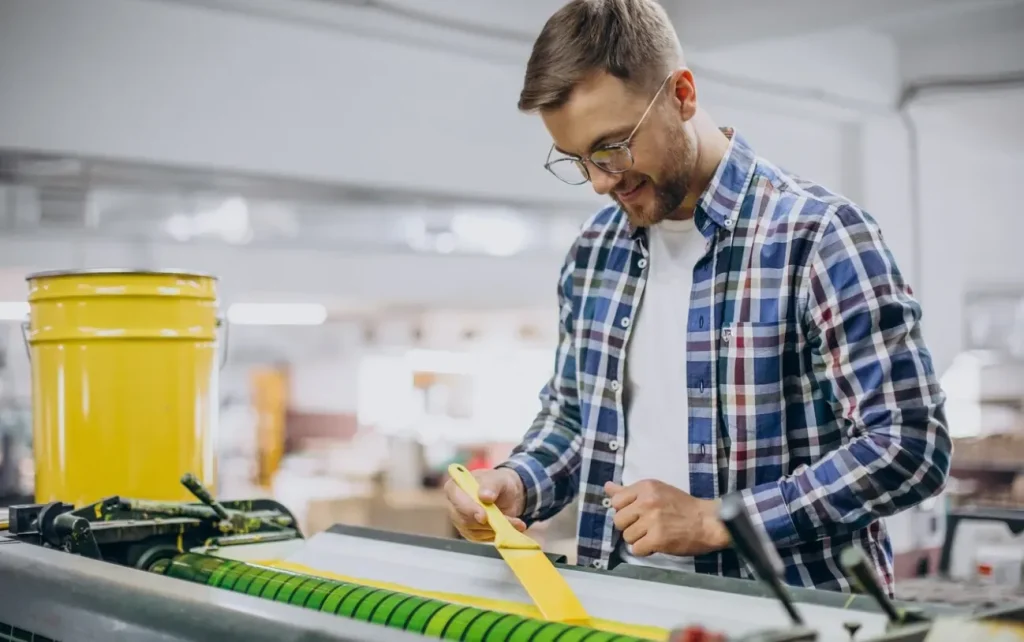
Advanced screen printing techniques unlock new dimensions of texture and color on fabric and other substrates. From the precise artistry of halftone screen printing, designers gain nuanced control over gradients and depth through careful dot placement, screen tension, and press technique. This guide covers how to manage mesh, emulsion, curing, squeegee pressure, and drying conditions to preserve color fidelity across multiple passes. Careful sequencing and consistent ink application help ensure sharp edges and reliable registration across long print runs. For color-rich applications like apparel, mastering CMYK screen printing alongside halftone decisions yields bold, durable results that stand up to washing and wear.
In practical terms, these methods translate to gradient-rich ink layering, where multiple passes build depth and texture. Think in terms of tonal rendering, dot patterns, and color-building strategies that give imagery volume without sacrificing printability. Beyond straightforward inks, finishes like metallic sheens, glow effects, and tactile overlays emerge from a disciplined workflow that coordinates ink viscosity, mesh choices, and curing time.
1. Advanced screen printing techniques: Halftones, shading, and CMYK integration
Advanced screen printing techniques fuse photographic realism with durable, high-impact finishes. By leveraging halftone screen printing alongside CMYK workflows, designers can recreate complex gradients and subtle tonal shifts on fabric without resorting to an overload of colors. This approach preserves fabric hand-feel while delivering rich, print-ready imagery that reads clearly from a distance and up close.
To maximize results, align halftone patterns with your color separations and set appropriate mesh counts. Understanding how dot size, frequency, and angle influence edge sharpness and moiré potential is essential for clean registration across multi-pass runs. Pairing halftone work with CMYK screening requires careful calibration of ink density and underbase strategy to maintain vibrancy and accurate color reproduction.
2. Halftone screen printing mastery: building gradients with precision
Halftone screen printing enables smooth gradients and photographic detail using tiny ink dots. This technique hinges on selecting dot geometry, screen angle, and stencil fidelity to render subtle transitions without heavy ink loads. Mastery comes from planning the artwork for halftone conversion, then translating that plan into a predictable ink laydown on various fabrics.
Practical mastery involves testing dot gains, mesh tension, and exposure consistency. Start with a controlled set of test prints to verify gradient fidelity, ensuring that the halftone pattern remains legible when layered with other colors. Proper registration and an adequate cure between passes help prevent edge creep and color bleed, especially in designs with fine detail and multiple tonal ranges.
3. Screen printing shading techniques for depth and realism
Screen printing shading techniques add depth and atmosphere by layering color, adjusting opacity, and employing subtle texture. This Descriptive approach transforms flat silhouettes into dimensional visuals, where light and shadow are suggested through carefully orchestrated passes, gradients, and line work.
Key strategies include gradient shading via layered inks, cross-hatching for a hand-drawn feel, and managing ink viscosity to modulate saturation across passes. Consistency in squeegee speed and pressure is crucial to avoid pooling or bleeding. When shading, consider combining halftone elements with solid color layers to achieve natural transitions while maintaining print stability on the garment.
4. Special effects screen printing: Metallics, glow, puff, and color-changing inks
Special effects screen printing expands the creative palette with finishes that react to light, touch, or temperature. Metallics and pearlescents add a reflective sheen, while glow-in-the-dark and UV-reactive inks reveal hidden details under specific lighting conditions. Puff or flock inks introduce tactile dimension that enhances the design’s physical texture.
Implementing these effects requires thoughtful layering and curing schedules. Metallics can be sensitive to substrate color and base layers, so swatch testing is essential to predict contrast and adhesion. Puff and flock techniques demand adequate air exposure and curing to achieve maximum loft, while heat-activated inks require precise timing to avoid scorching and incomplete activation.
5. Layered ink techniques: Creating depth through stacked color layers
Layered ink techniques involve stacking multiple color layers to build depth, texture, and vibrancy. This approach pairs naturally with other advanced methods, allowing designers to craft complex visuals that remain readable after washing and wear.
Best practices focus on planning a clear hierarchy of base colors, midtones, and highlights, then controlling ink density and dry times between passes. Masking and selective stenciling help maintain edge definition, while careful sequencing ensures that layered inks maintain their intended relationships without muddying or bleeding.
6. CMYK screen printing workflows: Color separation, calibration, and consistency
CMYK screen printing offers a pathway to full-color artwork with fewer screens, enabling efficient production without sacrificing image fidelity. Integrating CMYK with halftones, shading, and layered inks expands the potential for photo-like prints on textiles while keeping production practical.
To ensure reliable results, calibrate each color channel precisely, use high-quality film positives and emulsions, and optimize print order. Proofing on similar fabrics helps catch opacity shifts and tint shifts before full runs. Beyond CMYK, consider selective spot inks or metallics to add brand-specific accents that reinforce visual identity without compromising overall color accuracy.
Closing note on applying these techniques for reliable, market-ready results
Practice, testing, and documentation are the pillars of turning advanced screen printing techniques into repeatable production. Maintain a running log of mesh counts, emulsions, exposure times, and ink brands to streamline future projects and ensure consistent results across batches.
As you scale, integrate a robust color-management workflow that includes pre-production proofs, color swatches, and standardized curing protocols. This disciplined approach helps harness halftone screen printing, screen printing shading techniques, special effects screen printing, layered ink techniques, and CMYK screen printing into a cohesive system that delivers high-quality, reproducible apparel and textiles.
Frequently Asked Questions
What are advanced screen printing techniques and how does halftone screen printing fit into them?
Advanced screen printing techniques refer to methods that add depth, texture, and color accuracy beyond solid fills. Halftone screen printing is a core method within this approach, using tiny ink dots to create gradients and shading. By selecting appropriate mesh counts, dot angles, and exposure, you can reproduce smooth midtones while reducing ink load, improving garment feel and drying times.
How can screen printing shading techniques enhance depth using layered ink techniques and CMYK screen printing?
Screen printing shading techniques build dimensionality by layering inks and controlling opacity to create smooth gradients. Layered ink techniques combine base colors, midtones, and highlights, while CMYK screen printing implements four color channels to approach photo-like images. Tip: ensure precise registration and consistent curing to keep layers crisp and avoid muddy overlaps.
What are the key considerations when using special effects screen printing to add texture and impact, and how do you plan layering?
Special effects screen printing offers metallics, glow, puff, and color-changing inks for tactile and visual drama. Plan layering so each effect sits correctly on top of or beneath other colors, and test on swatches to account for substrate color and underbase interactions. Manage curing times and adhesion by sequencing passes and using compatible inks.
What role does CMYK screen printing play in advanced techniques for achieving vibrant, photo-like artwork on textiles?
CMYK screen printing is a versatile foundation for advanced techniques, enabling full-color reproduction with fewer screens. It works best when properly calibrated, with accurate color separations and dot gains to preserve gradients created by halftone patterns. Combine CMYK with selective spot inks or metallics to expand color and effect possibilities.
What practical tips help maintain color accuracy and sharp registration when applying halftones, shading, and layered ink techniques in practice?
Practical tips include proofing on similar fabrics, using test strips for halftone dot size and angle, maintaining consistent mesh tension and squeegee pressure, and allowing proper dry times between layers. Align color separations carefully and validate edge sharpness through multiple passes to avoid registration drift.
What are common troubleshooting steps for issues encountered with advanced screen printing techniques, such as moiré, ink bleed, or uneven coverage, and how can you prevent them?
Troubleshooting starts with a controlled test run: verify artwork separation, screen tension, and emulsion thickness; check curing temperatures and times; confirm ink viscosity and opacity for each layer; recheck squeegee durometer and stroke speed. Moiré or color misregistration often indicates misalignment of halftone dots or print order, so adjust screen angles and use precise registration guides. Consistent ink management and substrate testing are essential for reliable results.
| Topic | Key Points |
|---|---|
| Halftones in Screen Printing | – Recreates continuous tones with tiny ink dots; eye blends dots into gradients, shadows, and midtones. – Requires artwork prep, stencil creation, and printing discipline. – Why halftones matter: realistic shading and photographic detail with lower ink load; can improve garment feel and drying times; enables smooth light-to-dark transitions. – Implementation: prepare halftone-ready artwork; set dot size, frequency, and angle; choose appropriate mesh count; higher mesh = finer dots; exposure time and emulsion thickness affect fidelity; align color separations with halftone patterns for clean registration across passes. |
| Shading Techniques in Screen Printing | – Adds depth and dimension via gradients, layering, and texture. – Approaches include layered ink passes, gradient halftones, cross-hatching, and stippling. – Variable ink viscosity to modulate transitions between passes. – Practical tips: start with a strong base, build midtones/highlights with additional passes, maintain consistent squeegee pressure, combine halftone dots with shading layers, ensure CMYK overlays stay aligned. |
| Special Effects in Screen Printing | – Expands beyond solid ink: metallics/pearlescents, glow-in-the-dark, puff and flock, color-changing inks, clear overlays. – Implementation requires careful layering and curing; substrate color and under-base layers affect results. – Puff/ flock rely on air-drying or heat-setting; heat-activated effects require precise timing; map the print sequence for proper adhesion and finish. |
| Layered Ink Techniques | – Stacks multiple ink layers to create depth, texture, and rich color; often combines halftones, shading, and special effects. – Best practices: establish a clear hierarchy; monitor ink density; plan sufficient dry times between passes; use masking/stencils to preserve edges; pair well with CMYK workflows for vibrant, tactile results. |
| CMYK Screen Printing and Beyond | – CMYK workflows enable full-color reproduction with fewer screens; integrate halftones and shading for photo-like results. – Success tips: calibrate color channels precisely; use high-quality film positives and clean emulsions; optimize print order (base/black first, then color build-ups, then highlights) for vibrancy and adhesion. |
| Practical Tips and Troubleshooting | – Proof on similar fabrics to verify opacity and tint shifts. – Run tests for halftone angles and dot gains to check for moiré. – Maintain consistent mesh tension and squeegee pressure for repeatability. – Ensure proper curing to prevent scuffing or color bleeding; document process for future runs. |
| Case Study: Graduation Tee with Halftones, Shading, and Metallic Accents | – Halftone gradient sky; shading adds depth to crests; metallic accents provide sunlit highlights. – Demonstrates layering inks with CMYK to maintain smooth gradients and vibrant metallics without overpowering the design. |
Summary
HTML table illustrating the key points of Advanced screen printing techniques: halftones, shading, special effects, layered inks, and CMYK workflows, plus practical tips for reliable production.