
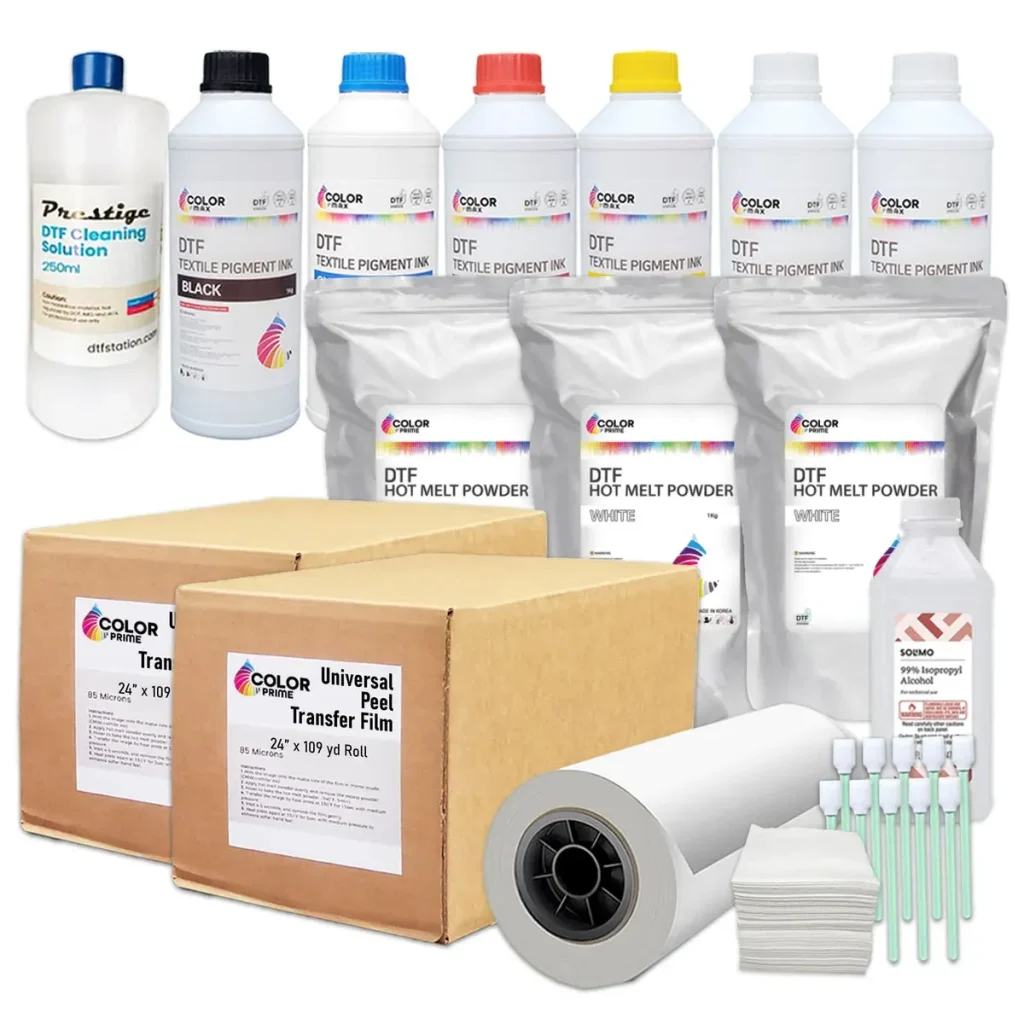
DTF supplies form the foundation of any successful direct-to-film project, guiding beginners toward vibrant, durable results with confidence. When you choose DTF printing ink, DTF films, and DTF powders that fit your workflow, you set up a predictable path from design to transfer. For beginners, the right beginner DTF supplies can shorten the learning curve, and this guide helps identify good options. This guide outlines practical criteria for evaluating ink quality, selecting compatible films, and ensuring adhesive powders deliver strong, durable transfers. With careful testing and a modest starter kit, you’ll achieve reliable color, crisp edges, and transfers that hold up to washing on a variety of fabrics.
Direct-to-film workflows hinge on three core materials: resilient inks, transfer films, and adhesive powders that enable transfers to textiles. Think of these elements as the color system, the carrier sheet, and the glue that secures the image during heat pressing. For readers exploring beginner-friendly options, focus on compatible ink sets, reliable films, and consistent powder application, while considering budget and maintenance. Beyond product labels, assess your printer compatibility, film thickness and surface finish, and how the powders cure and bond with the chosen fabrics. To help you move forward, this article shows how to choose DTF supplies by balancing performance, cost, and long-term support.
Frequently Asked Questions
What are DTF supplies and why do they matter for beginners?
DTF supplies are the ink, films, and powders used in direct-to-film transfers, along with the heat-press equipment. For beginners, reliable DTF inks, films, and powders ensure consistent color, sharp details, and durable results across fabrics.
How to choose DTF printing ink for your printer?
First, verify that the DTF printing ink is compatible with your printer model and head technology. Look for a wide color gamut, strong white-ink opacity for dark fabrics, stable curing, and smooth ink flow. Always test prints on similar fabrics to confirm performance.
What should I look for in DTF films to ensure sharp transfers?
Choose DTF films with the right thickness (roughly 75–110 microns), a smooth surface, and clear transparency. Ensure the film is compatible with your adhesive powder and fabric type, and that it feeds cleanly through your transfer workflow.
Why are DTF powders important, and how do I pick the right powder?
DTF powders act as the adhesive that bonds the printed image to fabric. Look for uniform particle size, good adhesion, easy dusting, and reliable curing. Consider wash durability and how the final hand feel matches your preferences.
What is a good beginner DTF supplies setup?
For beginners, a solid starting point is a beginner DTF supplies setup—a plan designed for new users. It should include a compatible ink set, a couple of DTF films of standard thickness, and an adhesive powder, plus a heat press. Start with small test runs on inexpensive garments and expand as you learn.
How to choose DTF supplies for reliable transfers?
Follow a simple evaluation flow: confirm that ink, film, and powder are designed to work together with your printer and heat press. Run small tests to check color accuracy, edge sharpness, and wash durability, and use the results to guide future purchases.
| Topic | Key Points |
|---|---|
| Ink |
|
| DTF films |
|
| DTF powders |
|
| Beginner kit and testing |
|
| Practical printing workflow for beginners |
|
| Common mistakes to avoid |
|
| Maintenance and storage |
|
Summary
DTF supplies form the foundation of successful direct-to-film printing, especially for beginners. This descriptive overview highlights how the three core components ink, film, and powder work together to create vibrant, durable transfers. By choosing reliable DTF printing ink compatible with your printer, selecting films with the right thickness and clarity, and using adhesive powders that deliver consistent adhesion and wash durability, you can build a solid workflow. Start with a modest beginner’s kit, test on similar fabrics, refine your process, and gradually expand your setup as you gain confidence. With thoughtful selection and careful testing, DTF supplies empower you to produce high quality transfers and unleash your creativity in textile printing.