
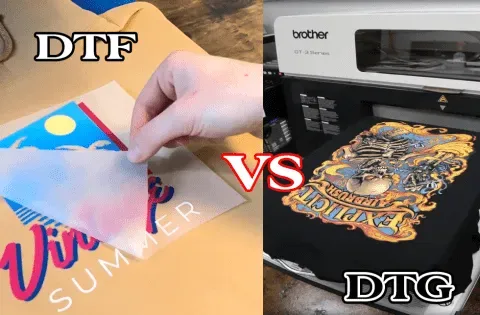
DTF transfers vs DTG is a hot topic for anyone evaluating apparel printing options today. A clear look at the potential DTF transfers advantages helps shop owners weigh setup time, color vibrancy, durability, substrate compatibility, and the ability to print on a broader range of fabrics. DTF uses a transfer film that carries pigments and is heat-set with adhesive powders, while DTG prints directly onto the fabric using water-based inks, which means the underbase, gradients, and white ink considerations can differ dramatically across cotton, blends, synthetics, and various garment colors, influencing color fastness and feel. In terms of consistency, production speed, and long-term wash durability, both methods offer compelling benefits, but their performance is highly dependent on fabric type, print coverage, and curing accuracy. For many shops, the decision comes down to the customer mix and logistics, balancing upfront equipment costs with ongoing material expenses to deliver reliable, high-quality apparel prints.
Beyond the branding labels, the choice often hinges on how images are applied to fabric—from transfer films and heat-press workflows to direct-to-garment ink deposition. By thinking in terms of on-demand decoration, substrate compatibility, and color fidelity across blends, designers can focus on the practical differences without getting bogged down in jargon. This approach aligns with the broader apparel printing methods landscape, helping teams compare durability, wash performance, and texture across cotton, poly blends, and the unexpected fabrics customers bring in. In short, the decision becomes a balance between setup costs, production speed, and the ability to reproduce complex imagery on diverse textiles. This perspective also helps stakeholders map workflows, from ink formulation and substrate tests to finishing steps, ensuring the chosen method integrates with existing production lines. Ultimately, the best approach often blends both strategies, selecting the right method by project requirements, fabric type, and customer expectations. Consider pilot runs across a mix of fabric surfaces to see practical outcomes, then refine your process and supply chain for consistent results. By documenting performance across real customer orders, you can build a robust, scalable approach that adapts to evolving designs and material trends.
1) DTF transfers vs DTG: Understanding the Core Differences in Apparel Printing Methods
DTF transfers and DTG printing are two popular apparel printing methods, each with its own process and ideal use cases. DTF transfers involve printing onto a special film, applying adhesive powder, curing, and then heat-pressing the design onto a variety of fabrics. DTG printing, by contrast, prints directly onto the garment after a pre-treatment step, delivering a clean, high-resolution image on cotton and light-colored fabrics. Understanding these core differences helps shops decide which method aligns with fabric variety, production goals, and budget constraints.
When evaluating DTF transfers vs DTG, consider the broader landscape of apparel printing methods. DTF offers flexibility across substrates, strong color saturation, and forgiving workflow for diverse substrate requirements, while DTG emphasizes detailed gradients and color fidelity on cotton. This keeps both methods relevant for businesses that need to serve multiple substrate types and customer requirements without overcommitting to a single workflow.
2) DTG printing quality comparison: How color, detail, and textures differ from DTF transfers advantages
DTG printing quality comparison often highlights the capability to reproduce fine gradients, subtle color shifts, and intricate textures on 100% cotton or light fabrics. DTG excels at smooth transitions and photo-realistic detail, especially when color management, pre-treatment, and curing are optimized. Designers frequently prioritize DTG for high-fidelity graphics on apparel where premium print quality is the top priority.
DTF transfers advantages come into play for bold graphics, vibrant colors on a wide fabric range, and strong performance on dark garments. The transfer film carries pigments directly to the fabric surface, which can yield high-contrast images with less reliance on fabric color. This makes DTF a compelling choice for varied substrates and garments where edge sharpness and durability matter, even if fine gradients are less dominant than DTG.
3) Durability, washability, and care across DTF and DTG
Durability and washability are essential when choosing between DTF transfers vs DTG. DTF transfers, when properly cured and heat-pressed with suitable settings, tend to offer robust wash durability and resistance to cracking or peeling across many laundering cycles. This reliability across fabrics—from cotton blends to poly blends—helps shops deliver consistent results with less risk of post-press issues.
DTG prints can also be highly durable, but performance is more sensitive to fabric type, pre-treatment quality, and laundering methods. In particular, dark fabrics require a careful white underbase strategy, which can affect stiffness and feel. Properly managed DTG workflows, including calibration and appropriate aftercare, can yield long-lasting images even on challenging substrates.
4) DTF vs DTG cost and production speed: Which fits your budget for small shops and high-volume runs
Cost considerations play a central role in choosing between DTF transfers vs DTG. DTF typically requires a lower upfront investment than a dedicated DTG printer, making it attractive for small shops or hobbyists. Per-item costs for DTF can be favorable for mid-range runs, especially when you scale up to several dozen to a few hundred pieces, depending on transfer material and ink consumption.
Production speed and scalability also differ. DTG can offer faster per-piece throughput at high volumes once the process is streamlined, particularly for cotton-focused orders. However, the initial equipment and maintenance costs are higher. For many businesses, a hybrid approach—DTF for diverse fabrics and small runs, DTG for high-volume cotton prints—can balance upfront investment with long-term productivity.
5) Fabric compatibility and substrate versatility: how DTF and DTG apply across cotton, blends, and polyester
Fabric compatibility is a major factor in apparel printing methods. DTF transfers are versatile across cotton blends, poly blends, and some polyester fabrics because the transfer film and adhesive can be tuned for different substrates. This makes DTF an appealing option when you need to accommodate a wide range of fabrics without changing printers or significantly altering workflows.
DTG, while delivering exceptional results on 100% cotton and light-colored fabrics, requires careful substrate selection and pre-treatment for best outcomes. Dark fabrics pose additional challenges due to the need for a white underbase, which can affect cost and production steps. When your catalog frequently includes blends or non-cotton fabrics, DTF’s broader substrate compatibility often provides a more adaptable solution.
6) Practical framework: hybrid approaches and guidelines for choosing DTF and DTG in your shop
A practical framework for many shops is to adopt a hybrid approach: use DTG for high-detail designs on cotton shirts and leverage DTF transfers for a broader range of fabrics, with strong durability and quicker setup times. This strategy allows you to cover more substrates, meet varied customer needs, and optimize margins. If you’re starting out, DTF can offer flexibility and inexpensive experimentation, while adding DTG later can unlock high-detail opportunities on cotton.
To implement effectively, begin with pilot tests using representative designs on your typical garments. Build color management profiles for common fabrics, document heat-press settings, and track durability through wash tests. This data-driven approach helps you tune processes, justify investment, and communicate clear expectations to customers about DTF transfers vs DTG outcomes.
Frequently Asked Questions
DTF transfers vs DTG: which method delivers better prints for apparel across different fabrics?
Both methods have strengths. DTF transfers offer strong color reproduction and durability across a wider range of fabrics, making them versatile for blends and unusual substrates. DTG excels on 100% cotton and light fabrics with high detail, but may be more sensitive to fabric type and pre-treatment. For mixed fabrics, DTF is often the more reliable choice, while DTG is ideal for cotton-focused runs.
DTF transfers advantages: what are the main benefits of choosing DTF transfers over DTG?
DTF transfers advantages include broad fabric compatibility, robust wash durability, and a generally lower setup cost, especially for small runs. They also enable bold colors on dark or light fabrics without relying heavily on a white underbase. This makes DTF a flexible option for varied garment projects.
DTG printing quality comparison: how do DTG and DTF compare for image detail and color?
DTG printing quality is superb for fine detail and smooth gradients on cotton or light fabrics, especially with proper pre-treatment and color management. DTF transfers can deliver dense colors and sharp edges, with less dependence on garment color, though some fine gradients may be less delicate than DTG on certain substrates.
DTF vs DTG cost: which option is cheaper for small shops?
DTF typically has a lower upfront investment and favorable cost per piece for small runs because you don’t need a dedicated DTG printer. DTG requires higher capital and ongoing maintenance, but can achieve faster throughput at scale on cotton-focused orders. Overall cost depends on order size, substrates, and labor.
Apparel printing methods: when should you choose DTF transfers vs DTG for different fabrics?
Choose DTF transfers for a broad range of fabrics (cotton blends, poly blends, some polyester) and for durable, versatile prints. Choose DTG for 100% cotton or compliant blends when high-detail, soft hand feel, and color accuracy on light fabrics are priorities.
Practical decision framework: what framework helps decide between DTF transfers vs DTG?
Assess fabric mix, typical order size, required color fidelity, budget for equipment and maintenance, and desired production speed. Consider a hybrid approach: use DTG for high-detail cotton runs and DTF for diverse fabrics or quick-turnaround orders. Always test designs on your garments to validate outcomes.
| Aspect | DTF transfers | DTG printing |
|---|---|---|
| What is DTF transfers? | Prints designs onto transfer film with adhesive powder; cured, then transferred to fabric; versatile across cotton, blends, and some polyesters. | Direct-to-garment: prints directly onto fabric after pre-treatment; best on 100% cotton or light fabrics; white underbase helps on dark fabrics but adds complexity. |
| Print quality | DTF offers bold color reproduction and is less dependent on fabric color because the color pigments travel on the transfer film. | DTG delivers high-resolution images with smooth gradients; excels on 100% cotton or light fabrics; white underbase aids brightness on dark fabrics but adds cost and complexity. |
| Durability & care | DTF generally provides strong wash durability when properly cured; resistant to cracking or peeling with correct heat-press parameters. | DTG prints are durable but more sensitive to fabric type, pre-treatment, and laundering methods; performance varies with substrate and care. |
| Cost & production speed | Lower upfront costs; favorable for small runs and shops without a dedicated DTG printer. | Higher initial equipment costs; can offer faster per-piece production at high volumes once the workflow is optimized, especially on cotton/light fabrics. |
| Fabric compatibility | Broad range of fabrics including cotton blends, poly blends, and some polyesters due to film formulation and adhesive; versatile across substrates. | Best on 100% cotton or compliant blends with proper pre-treatment; dark fabrics require a white underbase, which adds steps and cost. |
| Maintenance & workflow | Simpler, more forgiving workflow with fewer post-processing steps; smaller footprint in many setups; proper curing remains essential. | Requires precise maintenance: pre-treatment control, color management, and curing; larger footprint and more calibration work. |
| Environmental considerations | Transfer films and powders require responsible disposal; lifecycle considerations and potential recycling options where available. | Water-based inks and pre-treatment liquids require careful handling and disposal; overall footprint depends on usage and maintenance. |
| Practical decision framework | Consider fabrics, order size, color fidelity, and budget; DTF suits diverse substrates and lower setup, DTG favors high-detail on cotton. | Similarly, prioritize high-detail color fidelity on cotton and white-dark contrasts; a hybrid approach often works best across varied orders. |
| Hybrid approach & guidance | Many shops blend methods: use DTG for high-detail designs on cotton shirts and DTF for diverse fabrics and durable outputs. | A hybrid strategy leverages strengths of both methods to cover more fabrics, orders, and budgets. |
Summary
DTF transfers vs DTG is not a one-size-fits-all decision for apparel printing. Both methods offer compelling advantages, and many successful shops use a combination of both to cover a broader range of fabrics, orders, and budgets. The choice comes down to fabric compatibility, order size, desired print quality, and total cost of ownership. By understanding the strengths of DTF transfers and DTG printing—and by testing representative designs on typical garments—you can choose a path that delivers the best prints for your apparel, maximizes margins, and keeps customers satisfied. Whether you lean toward the bold versatility of DTF transfers or the high-detail clarity of DTG, the best prints emerge from thoughtful process selection, careful calibration, and a commitment to quality.