
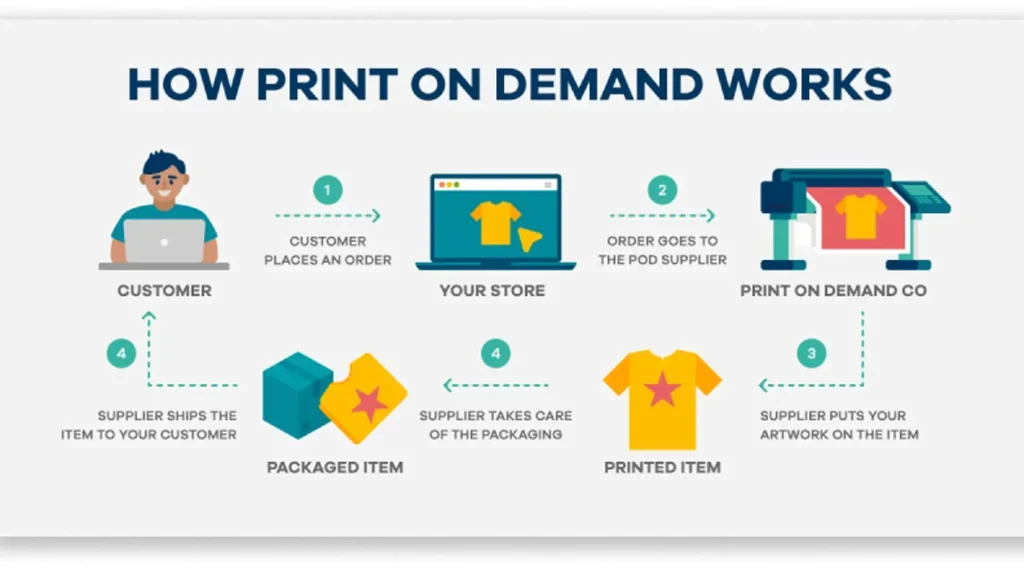
Print on Demand has transformed how creators bring products to market, letting you design once and ship on demand. This model minimizes upfront costs, reduces inventory risk, and enables rapid testing of ideas for makers exploring online marketplaces. Understanding the pros and cons of print on demand helps you weigh scalability, branding, and fulfillment. Value is found in selecting reliable partners, managing expectations, and ensuring consistent quality across orders. With smart pricing and thoughtful experimentation, the approach becomes a practical path to sustainable growth.
From a broader perspective, think of on-demand manufacturing and order-based production as modern alternatives to conventional print workflows. POD vs traditional printing highlights the trade-offs in cost, speed, and branding, helping makers decide where to invest their time and budget.
Understanding Print on Demand vs Traditional Printing: How POD Works in Practice
Print on Demand (POD) is a fulfillment model where products are created only after a customer places an order. This means minimal or no upfront inventory, lower initial investment, and the ability to test product ideas quickly without carrying stock. When you combine POD with a strategy that compares it directly to traditional printing, you unlock a clear view of where each method shines, including how POD vs traditional printing affects cash flow and turnaround times.
In practice, POD partners handle printing, packaging, and shipping on a per-order basis, enabling you to scale a product line with little risk. Traditional printing, by contrast, usually involves bulk production runs, higher setup costs, and a minimum order quantity (MOQ). Lead times can be longer, but unit costs often drop with volume, making it a compelling option for established products or large campaigns. Deciding between POD and traditional printing hinges on order volume, product type, branding goals, and available capital.
Profit Potential of Print on Demand: Pricing, Margins, and Growth
Understanding the profit potential of print on demand means examining costs, pricing, and volume. Typical POD margins per item can range broadly, and a successful strategy combines smart design choices, niche targeting, and efficient marketing. Key factors include base production costs, fulfillment fees, and platform charges, all of which shape the gross margin and the path to profitability.
To maximize earnings, focus on pricing discipline, upselling, and bundles that raise average order value. Efficient marketing—balancing organic reach with targeted ads, SEO, and conversion-optimized product pages—helps you convert traffic at a lower cost per sale. By modeling all cost components, including shipping and returns, you can forecast net profit more accurately and identify where price or product mix should shift to improve margins.
Pros and Cons of Print on Demand: What Makers Should Consider
Pros of Print on Demand include a low upfront investment, easy testing and iteration, global fulfillment capabilities, simplified logistics, and broad product options. This makes POD particularly appealing for makers who want to validate ideas quickly and scale only when a design proves its appeal.
Cons of POD include narrower per-unit margins, reliance on third-party providers, potential quality and color matching challenges, variable shipping times, and some limitations on customization. Mitigation strategies include ordering samples for quality checks, establishing clear design guidelines, selecting reliable partners, and maintaining direct communication with customers about expectations.
Traditional Printing Costs: When Large Runs Win and How to Compare
Traditional printing costs often involve significant upfront investments in equipment, materials, and stock, plus MOQ commitments and longer lead times. For high-volume runs, these costs can drop per unit through economies of scale, enabling stronger per-item margins and more control over production variables such as color accuracy and fabric quality.
However, the financial and operational commitment is higher. Inventory risk, storage needs, and cash flow considerations can offset the savings from bulk production. When evaluating traditional printing against POD, measure total cost per unit at projected volumes, assess the reliability of fulfillment, and consider whether the brand’s growth trajectory justifies the upfront capacity and ongoing maintenance.
Custom Merchandise Printing: Expanding Your Brand with POD and Hybrid Approaches
Custom merchandise printing covers a wide range of products—from apparel and accessories to home goods—designed to reflect a unique brand identity. By leveraging POD for testing new designs and niches, creators can quickly validate demand while maintaining flexibility and minimal risk. The ability to iterate styling, placements, and colorways makes custom merchandise printing an inviting path for brand experimentation.
A hybrid approach combines the strengths of POD and traditional printing: use POD to test concepts and capture demand, then move high-performing items to traditional printing for larger, more cost-efficient runs. This strategy balances risk management with scalability, allowing you to grow a product line without overcommitting capital from the outset.
Best Practices to Maximize POD Profitability: Quality, Branding, and Operational Discipline
To maximize the profit potential of print on demand, start with a well-defined niche and invest in high-quality designs. Establish color and file guidelines, order samples, and maintain consistent branding across product pages to build trust and justify pricing. Working with reliable POD partners who offer strong print quality, material options, and solid international shipping is essential for maintaining customer satisfaction.
Beyond design, focus on pricing strategy, testing, and measurement. Regularly retire underperforming designs and expand those with strong signals. Enhance the customer experience through accurate sizing, clear shipping estimates, and cohesive packaging. Monitor metrics like gross margin, average order value, and customer lifetime value to refine your mix and continue growing profitability over time.
Frequently Asked Questions
How does Print on Demand compare to traditional printing (POD vs traditional printing)?
Print on Demand (POD) lets you design once and fulfill orders as they come, with minimal upfront costs and no inventory risk. Traditional printing typically involves bulk runs, higher upfront costs, and a minimum order quantity (MOQ). POD excels for testing products and scaling with demand, while traditional printing can offer lower per-unit costs at high volumes but requires more capital and inventory planning. The best choice depends on order volume, product type, and cash flow.
What is the profit potential of print on demand for makers and small brands?
Profit potential of print on demand varies by design quality, niche, pricing, and marketing efficiency. Gross margins often range from about 15% to 40% per item, with higher profitability from bundles and higher-value products. Net profit depends on advertising costs, shipping, and platform fees. With careful pricing, testing, and scale, POD can reach four-figure monthly profits for focused catalogs.
What are the pros and cons of print on demand for new sellers?
Pros: low upfront investment, easy testing, global reach, simplified fulfillment, and broad product options. Cons: thinner margins on individual items, reliance on a third-party supplier, potential quality or color consistency issues, longer or variable shipping times, and limited customization. Consider these pros and cons of print on demand when planning product strategy.
How do traditional printing costs compare to POD costs for small runs and custom merchandise printing?
Traditional printing costs usually include higher upfront setup, equipment, and minimum orders, making per-unit costs lower only at very high volumes. POD costs are per item, covering production, fulfillment, and platform fees, with little to no MOQs. For small runs and custom merchandise printing ideas, POD minimizes risk but may yield higher per-unit costs; as volume grows, traditional printing can become more economical.
Can Print on Demand handle custom merchandise printing with strong branding?
Yes, Print on Demand supports custom merchandise printing across apparel, accessories, and home goods, enabling brand-consistent logos, colors, and packaging. However, deep customization or exact color-matching may require choosing a capable POD partner and ordering samples to ensure consistency with branding. POD is well-suited for branded products and scalable experiments.
What strategies maximize profitability with Print on Demand?
Focus on a clear niche and winning designs, price strategically by accounting for all costs, test designs and product pages, and optimize marketing efficiency. Choose reliable POD partners with strong print quality and fast shipping, create bundles, and expand product lines to raise average order value. Track metrics like gross margin, AOV, CAC, and lifetime value to adjust strategy and improve the profit potential of Print on Demand.
| Topic | POD Highlights | Traditional Printing Highlights | Notes / Profit Implications |
|---|---|---|---|
| What is POD vs Traditional Printing? |
|
|
Choice hinges on order volume, product types, branding goals, and cash flow. |
| Pros of POD |
|
|
POD enables testing and rapid growth; margins depend on per‑unit costs and marketing efficiency |
| Cons of POD |
|
|
Fees, shipping, and returns can impact net profit; quality control is critical |
| Profit Potential with POD |
|
|
Typical POD gross margins range roughly 15%–40%; success depends on design quality, pricing, and marketing; net varies with costs |
| Traditional vs POD: Key Differences |
|
|
Different models suit different goals; many use a hybrid approach |
| When to Choose POD vs Traditional |
|
|
Hybrid approaches work well: test with POD, shift winners to traditional printing |
| Best Practices to Maximize POD Profitability |
|
|
A strong mix of design, pricing, and marketing drives healthy margins |
| Quality Control and Brand Considerations |
|
|
Consistent branding builds trust and supports pricing power |
Summary
Print on Demand offers a flexible, low‑risk path for makers to bring products to market without carrying inventory. By designing once and fulfilling orders as they come in, Print on Demand minimizes upfront costs, reduces risk, and enables rapid testing of ideas. POD shines for small brands that want to experiment with niches, scale quickly, and reach a global audience, but it also means relying on a trusted provider for print quality, color accuracy, and on‑time fulfillment. The choice between POD and traditional printing depends on order volume, product type, branding goals, and cash flow. A savvy strategy often blends both approaches: use POD to test designs and markets, then move high‑performing items to traditional printing for larger runs and higher margins. Key success factors include selecting reliable POD partners, pricing products to cover production fees and marketing, and maintaining brand consistency through packaging and visuals. With careful planning, Print on Demand can power a sustainable product line that grows with your business while keeping risk in check.