
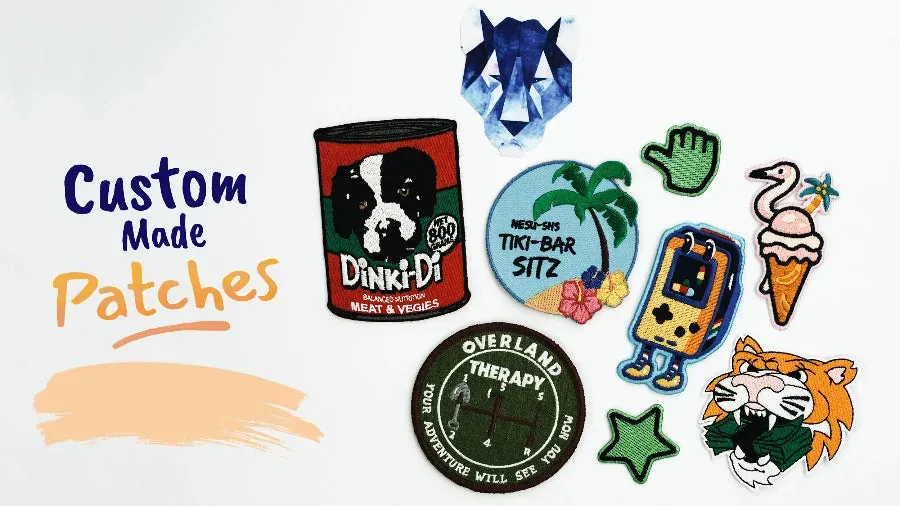
Budget-Friendly Custom Patches offer a smart way to equip teams, clubs, and events with standout branding without breaking the bank. They come in embroidery or weave options, delivering durability and legibility for logos that travel from field to uniform. For many logos, cost-effective options can deliver excellent value. If you’re applying patches to uniforms or bags, consider iron-on solutions for quick installs with solid adhesion. This guide highlights practical, real-world tips to maximize value while preserving quality.
Beyond the upfront choice, cost-effective patches and economical emblems can still project a strong brand message. A patch pricing guide helps buyers compare embroidery, weave, iron-on backings, and finishings to find the best value. For larger orders, bulk patch discounts can significantly reduce the per-piece cost while maintaining quality. Consider factors like color fidelity, edge finishing, and backing when planning a scalable program. By choosing the right mix of materials and production options, you can maximize impact without overspending.
Budget-Friendly Custom Patches: Maximizing Value Without Compromise
Patching value starts with clarity on what you truly need. Budget-Friendly Custom Patches prove that you don’t have to sacrifice durability or appearance to stay within cost targets. By aligning design choices with production realities, you can achieve a standout patch that fits your budget while still delivering brand consistency and wear resistance. A thoughtful approach to color, stitch count, and backing helps you extract the most value from every dollar spent.
To drive smart spending, use a patch pricing guide as your compass. This means understanding setup fees, color changes, minimum order quantities, and per-unit costs. With a clear plan, you can negotiate favorable terms, batch orders efficiently, and leverage bulk patch discounts when appropriate. The result is a higher-quality patch program that remains budget-conscious without compromising on legibility, durability, or branding.
Affordable Embroidered Patches vs Woven Patches: Making the Right Budget Choice
For many logos and teams, affordable embroidered patches deliver exceptional value. Embroidered patches are the cost-efficient workhorse, offering a robust look with strong durability and a broad color range. When the design isn’t overly intricate, 4–6 color embroidery with a merrow edge often hits the sweet spot between price and impact, making them a staple choice for budget-conscious projects.
Woven patches can capture intricate details and tiny text, but they typically come with higher unit costs. If your design relies on sharp micro-details or very small text, weigh the premium against the need for legibility at patch size. In many cases, a slightly larger embroidered patch or a simplified color palette preserves clarity while keeping overall costs in check.
Custom Iron-On Patches: Convenience, Cost, and Application Considerations
Custom iron-on patches offer a quick, low-labor solution that can dramatically reduce installation time for teams, schools, and events. Iron-on backings minimize on-site handling and enable faster distribution, a key advantage when timelines are tight or when staff resources are limited. This backing is a strong fit for budget-friendly patches when durability requirements aren’t extreme or when items won’t endure heavy abrasion.
However, iron-on adhesion can vary by fabric type and heat exposure. It’s essential to test compatibility across the items you’ll patch, especially athletic fabrics or moisture-wicking materials. For higher-wear use, consider sew-on or high-durability backings as a strategic upgrade, balancing cost with long-term performance.
Design and Color Strategy: A Patch Pricing Guide for Smarter Budgets
A well-structured patch pricing guide helps you forecast costs by breaking down design-driven variables: setup fees, color changes, minimums, and per-unit pricing. Reducing the color palette to a core set of colors and simplifying complex gradients can dramatically lower production time and material costs, while preserving brand recognition and visual impact.
Plan ahead with PMS color matching only for critical brand colors to limit expenses, and request digital proofs to catch issues before production. A clear design brief that aligns with the vendor’s capabilities minimizes revisions, speeds up quotes, and keeps you on budget without sacrificing logo integrity or readability on the patch.
Bulk Patch Discounts: Planning for Large Orders and Reorders
Bulk patch discounts reward volume and repeat business. By forecasting the number of patches across seasons or events, you can negotiate tiered pricing that lowers the per-unit cost as order size increases. Long-term partnerships may also unlock favorable terms, such as reduced setup fees or priority production windows, helping you achieve lower total costs over time.
When planning large orders, consider logistics like storage, reorders, and future needs. A standing quote or contract for recurring runs can streamline procurement, minimize shipment costs, and reduce administrative overhead. This forward-looking approach is especially valuable for teams, clubs, and brands that run annual or quarterly patch programs.
Quality Assurance and Vendor Selection: Getting Real Value from Your Patch Program
Value isn’t just price—it’s performance. Establish a QA process that includes color-approved proofs, stitch density checks, backing type confirmation, and crack-resistant edge finishing. Evaluating durability through wear-testing or colorfastness checks ensures patches hold up across washes and campaigns, providing long-term value beyond the initial order.
Choose vendors with transparent pricing, clear proofs, and documented quality standards. Request references and sample runs to verify consistency, lead times, and responsiveness. A vendor that supports your quality expectations and offers practical after-sales support is essential for maintaining budget-friendly results over multiple orders.
Frequently Asked Questions
What are Budget-Friendly Custom Patches, and how can I get affordable embroidered patches without sacrificing quality?
Budget-Friendly Custom Patches are value-driven patches that maximize durability and appearance at a lower total cost. To achieve affordable embroidered patches without sacrificing quality, keep designs simple, limit the color palette to 4–6 core colors, and request a digital proof before production. Consider standard options like a merrow edge and iron-on backings for quick use, and test legibility on the actual patch size.
How does a patch pricing guide help when planning Budget-Friendly Custom Patches?
A patch pricing guide clarifies cost drivers such as setup or plate fees, color changes, minimum order quantities, and unit pricing that drops with higher quantities. Use it to compare vendors, plan a bundled order, and aim for the lowest total cost per patch. Always request a transparent quote that includes proofs and lead times.
Which patch type is most cost-effective for Budget-Friendly Custom Patches: embroidered vs woven?
For Budget-Friendly Custom Patches, affordable embroidered patches with a limited color palette and merrow edge often provide the best value. Woven patches can capture fine detail but usually come with a higher unit cost, so reserve them for designs that require tiny text or ultra-fine lines.
How do backing options like custom iron-on patches affect total cost for Budget-Friendly Custom Patches?
Custom iron-on patches can lower labor costs and speed up distribution, helping reduce the total cost of Budget-Friendly Custom Patches. However, adhesion quality can vary by fabric, so test compatibility. Sew-on backings offer durability but add a bit to the per-patch price.
How can I maximize savings with bulk patch discounts for Budget-Friendly Custom Patches?
Bulk patch discounts are typically tiered—the more patches you order, the lower the unit price. If you anticipate ongoing needs, negotiate standing quotes or contracts and explore inventory storage or reorders to minimize recurring setup fees, all while maintaining quality.
What should I include in a quote request to ensure value when ordering Budget-Friendly Custom Patches?
Provide a clear design brief with a concise color map, backing preference, patch size, and quantity, plus your timeline. Request a pre-production digital proof and, if needed, a physical swatch. Ask for a complete quote that lists setup fees, per-unit costs, color changes, and shipping details to compare value accurately.
| Aspect | Key Points |
|---|---|
| Patch Type and Detail | – Embroidered patches: standard workhorse; durable, wide color range; good value for simple designs; check legibility at small sizes. – Woven patches: can capture intricate details and tiny text but typically higher unit costs; may be worth it for premium effect on simple, bold shapes. |
| Backing Options and Their Cost Implications | – Iron-on (heat-activated) backs: convenient, lower labor costs, faster installation; test compatibility across fabrics to ensure quality. – Sew-on backs: ultra-durable, ideal for items washed frequently or subjected to abrasion; adds a small per-patch cost but extends life. |
| Size, Shape, and Detail Matter | – Patch size directly affects price due to material, thread, and labor. – Complex shapes or irregular die-cut edges increase finishing time and cost; aim for clean silhouettes to control costs. |
| Materials, Thread, and Color Management | – Thread choice and backing glue influence durability and price; polyester thread with a merrow edge offers good value. – Color management matters: a larger palette increases costs; plan 4–6 core colors and limit PMS matching to visible areas. |
| Proofing, Quotes, and Lead Times | – Digital proofs help catch issues but can add slight delays or fees; request free proofs with limits on changes if time is tight. – Lead times vary; budget-friendly options may require longer production or lower-priority slots—plan accordingly. |
| Understanding a Patch Pricing Guide | – Setup/plate fees can be amortized across many patches. – Each color added can raise per-patch cost; simplify color palettes to save. – Minimum order quantities may apply; seek low-min suppliers or exceptions. – Per-unit cost typically drops with quantity; consider bundling or ordering extra. – Shipping and handling: compare total costs, not just unit prices. |
| How to Get the Best Value: Practical Strategies | 1) Define a clear design brief and scale expectations. – Keep color palette limited to reduce complexity. – Ensure legibility by testing text size on the patch. – Share a simple color map with the vendor. 2) Compare patch types for your use case. – Embroidered with 4–6 colors and merrow edge is often budget-friendly. – For fine details, discuss woven options or slightly larger patches to preserve legibility. 3) Optimize backing and application needs. – Sew-on or high-durability backings for uniforms that are washed often. – Iron-on for event giveaways or quick distribution. 4) Leverage bulk patch discounts and long-term partnerships. – Seek tiered discounts for larger orders; negotiate standing quotes or contracts. – Explore inventory storage and reorders to minimize setup fees. 5) Manage color matching efficiently. – Demand a pre-production digital proof; use limited colors to reduce lead times. – Single dominant brand color when exact matching is required. 6) Prove value with samples and quality checks. – Order a sample first; verify stitching, backing, and color fidelity; test colorfastness after washing. 7) Choose the right vendor and contract terms. – Look for transparent pricing, clear proofs, and documented quality standards. – Obtain a detailed quote including setup, color changes, shipping, and delivery date. 8) Plan for long-term value, not just the first order. – Higher-quality backing or edging may reduce replacement costs over time; consider total cost of ownership. |
| Real-World Scenarios: Balancing Cost and Quality | – Local sports team with 120 players: 4-color embroidery, iron-on backs, merrow border; affordable, durable patch that wears well. – School club with annual events: negotiate recurring orders; loyalty discounts, reduced setup, faster turnaround. – Brand merchandise run: patch size impacts price; smaller patch with fewer colors preserves brand impact while controlling cost. |
| Quality and Assurance: Getting Maximum Value Without Compromise | – Establish a clear QA process: color-approved proof, verify stitch density and backing. – Look for vendors with published quality metrics and post-sale support. – A patch that fades or performs poorly erodes trust and value. |