
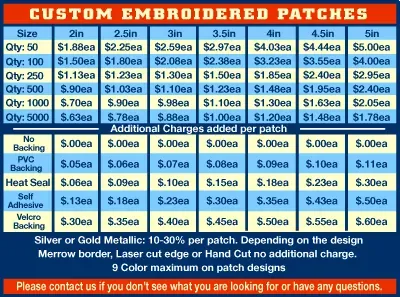
Pricing Custom Patches is a strategic concern for brands, clubs, teams, and event organizers aiming for cohesive branding across uniforms, apparel, and festival merch. The actual price you pay is more than a single line item; it reflects a blend of materials, backing options, finishing, stitching complexity, and vendor capabilities—factors that drive custom patch costs. This introductory guide breaks down the main pricing factors, outlines common patch pricing models used by patch vendors, and offers practical tips to secure the best value without compromising quality. Understanding elements like patch size and shape, backing type, edge finish, thread color count, and setup charges helps you compare quotes with confidence and negotiate more effectively. By planning around these dynamics and requesting detailed, itemized quotes, you can secure durable patches that align with your branding goals and budget.
Beyond the initial price tags, projects are priced as a bundle that includes production time, material sourcing, and the supplier’s business approach to pricing. Turnaround time for custom patches can influence quotes, especially when rush options, multi-color logos, or intricate shapes are involved. Similarly, patch vendor pricing varies by vendor, service level, geography, and volume, affecting total spend even for identical artwork. To compare options effectively, buyers often translate budgeting questions into other terms such as embroidery costs, badge costs, or applique pricing, which helps when multiple vendors present different term sheets. By focusing on service levels, quality controls, and total landed cost, you can align expectations with vendors and avoid sticker shocks.
Understanding Patch Pricing: What Affects the Cost
Patch pricing is not a single-number bill. It reflects a bundle of costs that include materials, workmanship, finishing, and vendor capabilities. In practice, the final price is influenced by patch size and shape, backing and attachment method, stitch density and color count, edge finish, and whether the patch is iron-on, sew-on, or Velcro-backed. Artwork fees, setup charges, and shipping can further shape the total.
To compare quotes effectively, look beyond the unit price and focus on the line items. Patch pricing typically breaks out material costs, embroidery complexity, production labor, finishing, and any setup or art fees. You’ll often see variations across vendors because of internal processes, which is why getting a detailed, itemized quote matters for true apples-to-apples comparisons.
Pricing Custom Patches: Decoding the Quote and Line Items
Pricing Custom Patches: Decoding the Quote and Line Items. A typical quote for custom patches separates material costs, embroidery complexity, backing, edge finish, color changes, and any art or setup fees, plus shipping. This structure is what buyers should scrutinize to understand the true cost of a patch—the same design can have different line-item allocations under patch vendor pricing.
Because vendors categorize costs differently, it’s essential to ensure you’re comparing like-for-like: same patch size, shape, backing, edge finish, color count, and quantity. Ask for vector artwork and proofs to reduce rework, request samples to verify color matching and durability, and confirm lead times and minimum orders. This diligence helps control custom patch costs and aligns with your budgeting.
Turnaround Time for Custom Patches and Its Impact on Patch Pricing
Turnaround times vary widely: standard production commonly runs 7 to 21 business days after artwork approval, depending on complexity and quantity. Rush options exist for tight deadlines, but they typically incur rush fees and capacity constraints. In-house production can be faster for some vendors, while offshore suppliers may offer lower unit costs but longer transit and higher risk.
Choosing a vendor is therefore a trade-off between cost and delivery speed. If you need quick delivery, you might accept higher patch pricing or compressed production slots, while planning earlier buys or bulk orders can reduce the per-unit cost due to better turnaround efficiency and economies of scale.
Embroidery Patch Pricing: Color, Stitch Density, and Edge Finishes
Embroidery patch pricing is driven by stitch count and color changes. More stitches and multi-color logos require more thread changes and longer production time, pushing embroidery patch pricing upward. Designs with fine details or specialty threads (glitter or glow-in-the-dark) add premium costs.
Edge finishes and backing options also influence price. Merrow edges offer a crisp, durable finish but can raise the price versus laser-cut edges. Backing choices—iron-on versus sew-on or Velcro-backed—alter both cost and application convenience, so match the finish to the patch’s intended use for a balanced price and performance.
Cost-Saving Strategies: How to Compare Patch Vendor Pricing Effectively
Start with a detailed, itemized quote; look for material, embroidery, backing, finishing, setup, and shipping line items. Use patch vendor pricing as a basis for comparison, ensuring the quotes reflect the same patch shape, size, edge finish, color count, and quantity.
Request samples to verify color accuracy and durability, check MOQs and reorder options, and ask about bundled services like design support, proofs, and shipping. If vector art is already available, costs can drop; negotiation and planning can improve turnaround times while maintaining quality. This is how to manage custom patch costs and achieve better patch pricing.
Common Scenarios: Typical Costs by Size and Backing
Here are rough ballpark ranges to help budgeting, noting actual prices vary by vendor and design complexity. 1″ to 1.25″ patches with sew-on backing: roughly $0.75–$1.50 per patch in small runs; larger runs lower unit costs. 2″ patches with moderate detail and either sew-on or iron-on options: about $1.75–$4.50 per patch, depending on color count and edge finish. 3″ patches with complex logos or glitter thread: around $3.50–$8.50 per patch for small to mid runs, higher for premium features.
Backing and edge choices also drive cost: twill fabrics with merrow edges tend to command higher prices than basic cloth patches, and iron-on or Velcro-backed patches add convenience but can add to the total. For ongoing branding programs, volume pricing and long-term partnerships often unlock tiered pricing, predictable lead times, and bundled services that improve embroidery patch pricing over time.
Frequently Asked Questions
What factors influence Pricing Custom Patches and how do they affect patch pricing and custom patch costs?
Pricing Custom Patches is driven by multiple cost drivers such as patch size/shape, backing and attachment method, stitch density and color changes, edge finish, material type, and artwork/setup fees. Patch pricing is a bundle of line items (materials, embroidery complexity, production labor, finishing, and setup). To estimate custom patch costs, request detailed quotes that break out each item and compare like-for-like across vendors, while also factoring in shipping and any rush fees.
How does turnaround time for custom patches influence patch vendor pricing and your Pricing Custom Patches plan?
Turnaround time for custom patches varies by complexity and quantity. Standard production often ranges from 7–21 business days after art approval; expedited options exist but add rush fees. Longer lead times can affect per-unit costs due to capacity and demand, and may involve trade-offs with quality or shipping. Always ensure quotes reflect turnaround options as part of patch vendor pricing within your Pricing Custom Patches plan.
What is included in embroidery patch pricing when budgeting Pricing Custom Patches?
Embroidery patch pricing typically items material, embroidery complexity and stitch count, backing choice, edge finish, finishing, setup/art fees, and shipping. A detailed quote should separate these line items so you can compare Pricing Custom Patches across vendors and identify where costs can be optimized, such as reducing colors or choosing a simpler edge.
How can I compare patch pricing across vendors to ensure value within Pricing Custom Patches?
Compare like-for-like specifications (shape, size, backing, edge finish, color count, quantity) and request a detailed line-item quote. Ask for samples to verify color and texture, check MOQs and lead times, and review total cost including setup and shipping. Look beyond the lowest price to assess patch vendor pricing quality, durability, and delivery reliability.
What are typical embroidery patch pricing ranges for common Pricing Custom Patches scenarios?
Prices vary by size, detail, and finish. Rough ballpark ranges: 1″–1.25″ patches with sew-on backing ≈ $0.75–$1.50 per patch in small runs; 2″ patches with moderate detail ≈ $1.75–$4.50 per patch; 3″ patches with complex logos ≈ $3.50–$8.50 per patch for small-to-mid runs. Larger runs and simpler edge finishes can lower unit costs, while specialty features (glitter, glow-in-the-dark threads) raise embroidery patch pricing.
What practical steps can help optimize Pricing Custom Patches for cost, speed, and quality?
Provide clear specs (size, shape, backing, color count, edge finish, quantity), share vector artwork (AI/EPS/PDF), request a test or sample set, and plan for revisions. When possible, compare quotes with a detailed line-item breakdown, ask about MOQs and lead times, and negotiate bulk or loyalty pricing. Focusing on these patch pricing considerations helps balance cost, turnaround, and quality within Pricing Custom Patches.
| Topic | Key Points |
|---|---|
| Pricing Custom Patches — What it Means | – Pricing Custom Patches is a core consideration for brands, clubs, teams, and event organizers. The price reflects a mix of materials, workmanship, finishing, and vendor capabilities; it’s not a single line item. |
| Main Cost Drivers | – Patch size and shape; backing and attachment method; number of thread colors and stitch density; edge finish (merrow, heat cut, laser cut); iron-on vs sew-on vs Velcro backing. – Artwork fees, setup charges, and shipping can impact the final invoice. |
| Understanding Patch Pricing | – Pricing includes multiple line items (material costs, embroidery complexity, production labor, finishing, setup/art fees). – Quotes may separate line items; same design can differ across vendors. – Always request a detailed quote to compare like-for-like. |
| Cost Drivers Explained | – Material and backing: fabric (twill vs cotton), backing (iron-on vs sew-on), substrate; twill with merrow edges is typically pricier. – Embroidery complexity and stitch count: more stitches and color changes raise costs. – Colors and color matching: each color change adds setup work; more colors increase cost; color blocking can reduce cost. – Size and quantity: pricing scales with size and quantity; larger runs amortize setup costs. – Finish and edge: merrow vs laser cut edges affect price and production time. – Artwork and setup fees: vector artwork is often required; design or setup fees may apply; proofs may be free or chargeable. |
| Turnaround and Vendor Options | – Standard production typically 7–21 business days after artwork approval, depending on complexity and quantity. – Expedited options exist with rush fees and limited capacity. – In-house vs offshore production can affect speed, cost, and scale. |
| Vendor Strategies | – Balance cost and value; cheapest quote isn’t always best. – Request detailed, itemized quotes (material, embroidery, backing, finishing, setup, shipping). – Compare like-for-like (shape, size, backing, edge finish, color count, quantity). – Request samples to verify color, texture, and durability. – Check lead times and MOQs; consider reorder discounts and volume terms. – Leverage artwork assets to reduce costs. |
| Common Scenarios and Ballpark Pricing | – 1″–1.25″ patches, simple designs, sew-on backing: about $0.75–$1.50 per patch (smaller runs; lower unit cost with bigger runs). – 2″ patches with moderate detail, sew-on or iron-on: about $1.75–$4.50 per patch (depends on color count and edge finish). – 3″ patches with complex logos or glitter: about $3.50–$8.50 per patch (higher for small-to-mid runs; varies by features). |
| Volume Pricing & Partnerships | – Ongoing orders can unlock tiered pricing, predictable lead times, and consistent quality. – Volume discounts and loyalty pricing or bundled services (design support, proofs, shipping) can reduce overall costs. |
| Practical Steps to Manage Pricing | – Provide clear specs (size, shape, backing, color count, edge finish, quantity). – Share vector artwork (AI, EPS, PDF); PNG/JPG are references but may incur conversion fees. – Define delivery requirements (standard vs rush, shipping method). – Request test or sample sets; plan for post-launch adjustments. |
| Common Mistakes | – Underestimating color counts or details; more colors and tighter stitches raise costs. – Ignoring backing options; choosing expensive backing without need. – Not specifying quantity; leads to back-and-forth and higher quotes. – Not ordering samples; issues discovered after production incur rework charges. – Overlooking shipping and duties; international shipments add costs. – Undergoing multiple artwork revisions; additional setup charges. |
| Conclusion | – Pricing Custom Patches is a core consideration that blends design, materials, production methods, and vendor choices. By understanding the key cost drivers, turnaround options, and practical negotiation strategies, you can secure patches that meet quality standards while staying within budget. This approach is suitable for sports teams, clubs, events, or corporate branding initiatives, ensuring patches look great, perform well, and align with your schedule and budget. |
Summary
Pricing Custom Patches — Key points include definitions, cost drivers, pricing structure, vendor strategies, practical steps, common scenarios, and best practices for managing costs and ensuring quality.